How Running Events Are Becoming Part of Modern Lifestyle Behavior
Running in Indonesia is no longer viewed solely as a sport. Over the past few years, it has evolved into a lifestyle activity closely associated with wellness, social connection, and self-improvement.
From casual Fun Runs to large-scale marathon events, participation continues to grow among young and active consumers. To better understand this behavior, Snapcart conducted an online survey involving 1,361 Indonesian respondents across various demographic backgrounds.
The study explored how consumers participate in running events, what motivates them, how they prepare, and which channels influence their engagement with the running community.
Running Participation Continues to Expand
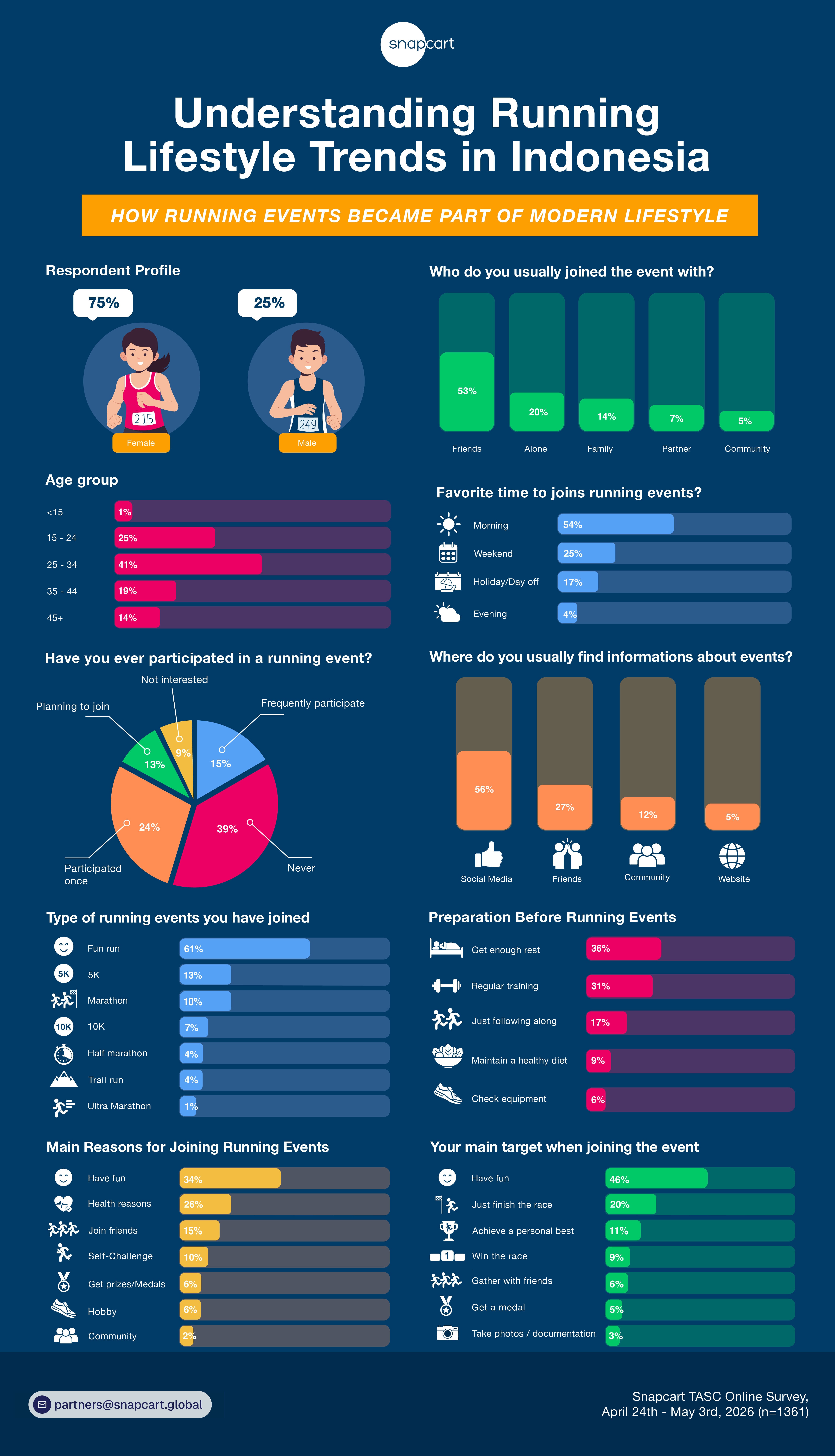
The survey shows that running culture still has significant room to grow in Indonesia. While 39% of respondents have never participated in a running event, interest remains strong: 24% have participated at least once, 15% frequently join running events and 13% are already planning to participate in the future. This suggests that running events are attracting not only experienced runners, but also a large aspirational audience interested in becoming part of the active lifestyle movement.
The audience profile is largely dominated by female respondents (75%) and consumers aged 25–34 years old (41%). These findings indicate that running culture resonates strongly with young adults who value wellness, social activities, and lifestyle-driven experiences.
Fun Runs Lead the Market
Among all event formats, Fun Run stands out as the most popular type of running event, joined by 61% of respondents. Participation in more competitive categories remains considerably smaller. This reflects a broader shift in consumer behavior. Many consumers are not necessarily seeking high-performance competition, but rather accessible and enjoyable experiences that align with their lifestyle. For brands and event organizers, this highlights the growing appeal of inclusive, community-driven event formats.
Running Is Deeply Social
One of the strongest findings from the survey is the social nature of running participation. More than half of respondents (53%) usually join running events with friends, while others participate alone (20%), with family (14%), and with partners (7%).
Having fun is the top reason for joining (34%), followed by health and wellness (26%). Interestingly, competitive motivations such as winning medals or prizes rank significantly lower.
These findings suggest that running events are increasingly becoming platforms for social bonding, lifestyle expression, community participation, and shared experiences rather than purely athletic competition.
Digital Platforms Shape Participation
The survey also reveals the strong influence of digital channels on running event awareness. More than half of respondents (56%) discover running events through social media, making it the leading source of information by a wide margin. Other discovery channels include recommendations from friends (27%) and running communities (12%)
This highlights how active lifestyle participation today is heavily shaped by digital content, peer recommendations, and online communities. For brands, this reinforces the importance of building digital-first campaigns that feel socially relevant and community-oriented.
Preparation Reflects Wellness-Oriented Behavior
Consumers are also becoming increasingly intentional in how they prepare before joining running events. The most common preparation habits include getting enough rest (36%) and regular training (31%). These findings show that running participation is closely connected with broader wellness routines and healthier lifestyle habits. For hydration, nutrition, and wellness brands, these preparation moments create valuable opportunities to engage consumers before, during, and after events.
Experience Matters More Than Competition
When asked about their main target during running events, nearly half of respondents (46%) stated that their primary goal is simply to have fun, followed by finishing the race (20%). Meanwhile, purely competitive objectives such as winning or earning medals represent a relatively small proportion. This signals an important shift in modern sports participation that consumers increasingly prioritize enjoyment, experience, and self-improvement over competition alone.
What This Means for Brands?
Indonesia’s growing running culture presents significant opportunities for brands targeting active and health-conscious consumers.
1. Lifestyle & Wellness Positioning
Running is increasingly associated with healthier living, enjoyment, and social connection. Brands that align with these values may resonate more naturally with consumers.
2. Community-Driven Engagement
Since participation is highly social, community activations and group-based experiences can strengthen brand relevance and loyalty.
3. Digital-First Marketing
Social media plays a central role in event discovery, highlighting the importance of digital storytelling, creator partnerships, and shareable experiences.
4. Hydration & Nutrition Opportunities
Preparation and recovery behaviors create strong relevance for hydration, nutrition, and wellness products throughout the consumer journey. As running continues to evolve into a mainstream lifestyle activity, brands that understand these behavioral shifts may be better positioned to connect with Indonesia’s increasingly active consumers.
Need to learn more about consumer habits and behavior? Contact us at partners@snapcart.global.