Fragrance products are no longer seen merely as complementary personal care items. For many Indonesians, using fragrances has become part of daily routines, self-expression, and lifestyle behavior.
Snapcart’s latest internal survey from 1.630 respondents reveals that fragrance usage is deeply integrated into consumers’ everyday activities, with scent preference and practicality playing major roles in product choices.
Fragrance Usage Is Highly Routine
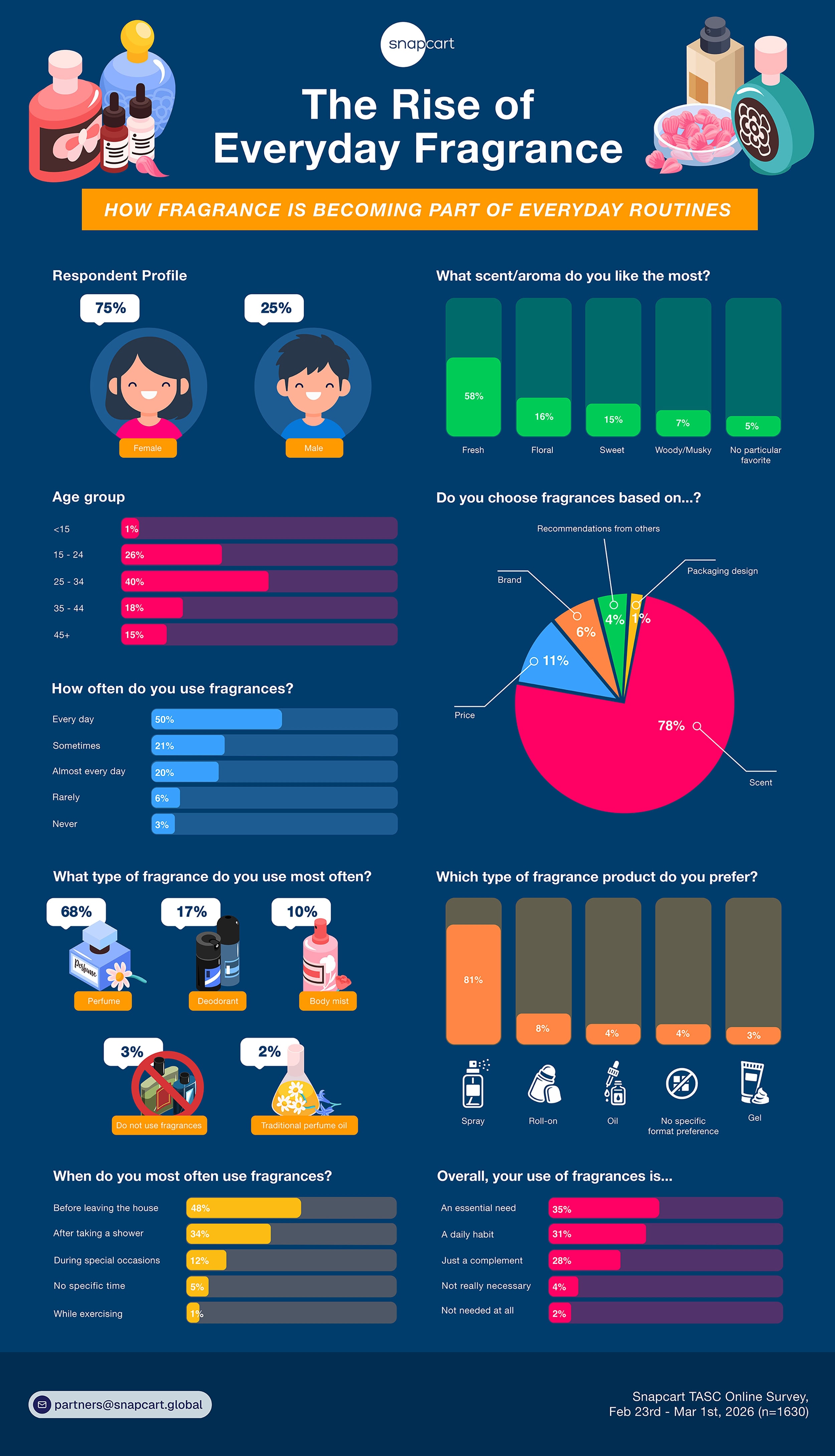
The survey found that half of the respondents (50%) use fragrances every day, while another 20% use them almost every day. Only 3% stated that they never use fragrance products. This pattern suggests that fragrance products are no longer reserved for special occasions. Instead, they are becoming embedded in consumers’ daily preparation rituals similar to skincare, fashion, or grooming habits.
When asked how they view fragrance usage, overall 35% consider it an essential need, and 31% see it as a daily habit. Meanwhile, 28% view it as a complementary lifestyle product. Combined, these findings indicate that fragrances are increasingly associated with routine, confidence, and lifestyle identity rather than occasional luxury.
Perfume Dominates Consumer Preference
Among fragrance product types, perfume remains the clear favorite, used most often by 68% of respondents. Other product preferences include deodorant (17%), body mist (10%), and traditional perfume oil (2%). The findings may reflect growing consumer interest in products perceived as more expressive, longer-lasting, and lifestyle-oriented compared to purely functional fragrance products.
Daily Activities Are Driving Fragrance Usage
The survey also reveals how closely fragrance usage is connected to consumers’ everyday movement and routines. Almost half of respondents (48%) most often use fragrances before leaving the house, while 34% typically apply them after taking a shower. Only a small portion of respondents associate fragrance usage with special occasions alone. This indicates that fragrance products are increasingly embedded into everyday routines rather than reserved for formal moments.
Consumers Prioritize Experience Over Branding
One of the strongest findings from the survey is that scent itself remains the biggest decision driver. Around 78% of respondents choose fragrance products primarily based on aroma, far ahead of price (11%), brand (6%), and recommendations from others (4%). The data suggests that consumers place greater importance on personal sensory experience than on external brand perception. This may indicate that fragrance purchases are highly personal and emotionally driven, where consumers prioritize how a scent makes them feel rather than simply following brand popularity.
Fresh Scents and Practical Products Dominate Preferences
Fresh scents are by far the most preferred fragrance category, chosen by 58% of respondents. Other scent preferences include floral (16%), sweet (15%), woody/musky (7%). This may reflect consumer preference toward fragrances associated with cleanliness, freshness, and everyday comfort.
Meanwhile, practicality also plays an important role in product format preference. Spray-based fragrances are overwhelmingly favored by 81% of respondents, far exceeding roll-on, oil-based, or gel formats. This highlights how convenience and familiarity continue to shape consumer behavior in the fragrance category.
Insights for Brands
The survey highlights how fragrance products are increasingly becoming part of everyday lifestyle behavior rather than simply functional personal care items. For brands, this creates several opportunities:
1. Fragrances can become part of daily confidence rituals
With many consumers using fragrances before leaving the house or after taking a shower, fragrance products are becoming closely associated with feeling prepared, fresh, and confident throughout the day.
2. Emotional and sensory experiences matter more
Since most consumers prioritize scent over price or brand, product experience itself plays a major role in purchase decisions. This creates opportunities for brands to focus on emotional storytelling and sensory-driven communication.
3. Freshness and self-expression are key themes
The strong preference toward fresh scents suggests that consumers increasingly associate fragrances with cleanliness, comfort, and personal identity. Fragrance products are no longer only about smelling good, but also about expressing everyday lifestyle preferences.
4. Practical formats remain important
The dominance of spray-format products indicates that convenience and ease of use continue to shape consumer preferences. Products that fit seamlessly into fast-paced daily routines may resonate more strongly with today’s consumers.
5. Daily usage creates engagement opportunities
As fragrance usage becomes more routine-driven, brands may have greater opportunities to build habitual usage, stronger product attachment, and long-term consumer relevance through everyday lifestyle positioning.
As consumers continue integrating fragrance usage into daily routines, brands that understand both the emotional and behavioral motivations behind fragrance consumption may be better positioned to stay relevant in Indonesia’s evolving personal care landscape.
Need to learn more about consumer habits and behavior? Contact us at partners@snapcart.global.